Electric Fields
Where do the fields come from? Start with a static point charge and build up: superposition, field lines, and conservative motion.
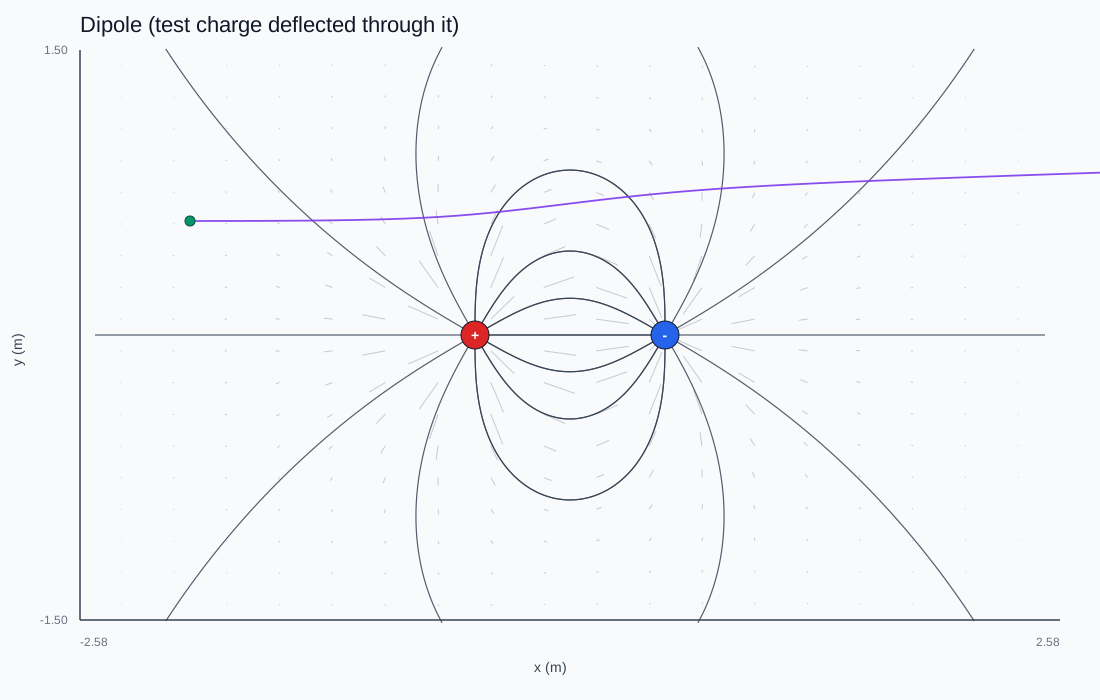
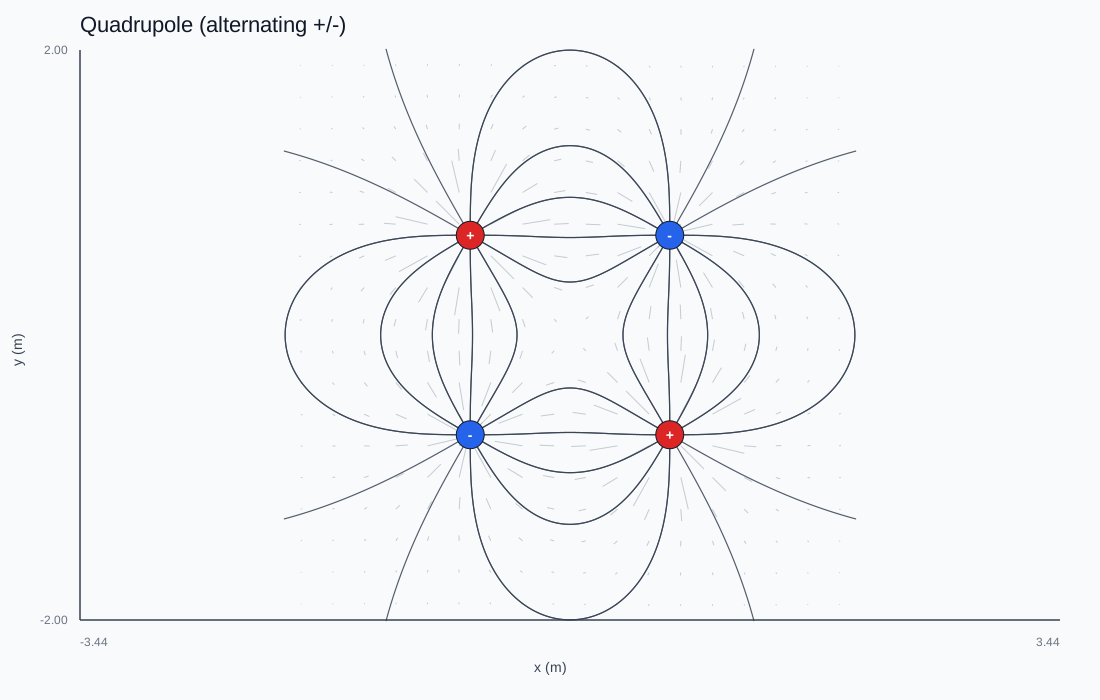
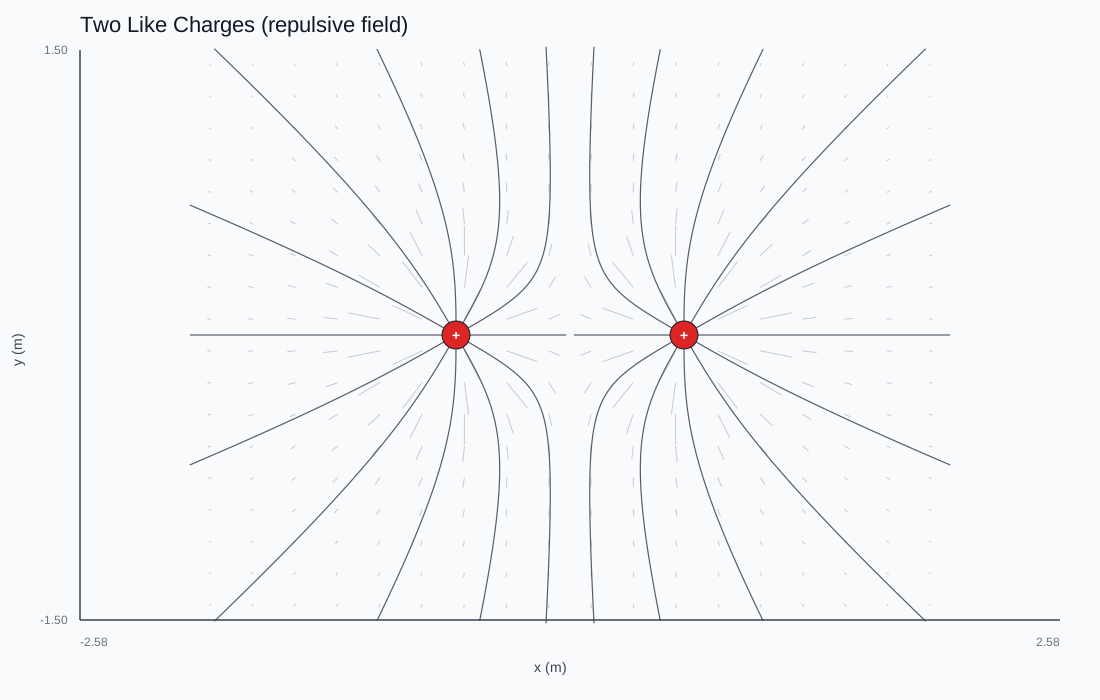
Drag the charges around and watch the field arrows update. Switch between a dipole, two like charges (note the null point), and a quadrupole whose field dies off far faster with distance.
Superposition
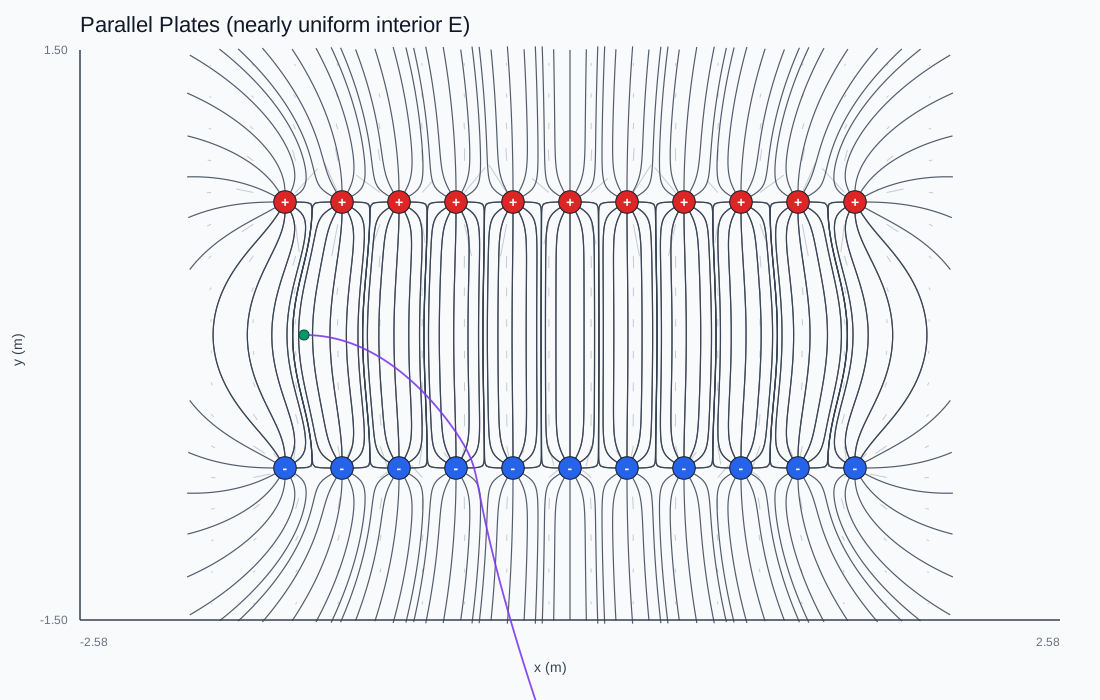
The field and potential at any point are sums over the charges: E(r) = \sum_i k\,q_i\,\frac{r-r_i}{|r-r_i|^3}, with E = -\nabla V. The field is the downhill gradient of the potential — every picture in this lab is built from that one rule applied to a few point sources.
Conservative, so RK4 is enough
Static charges make a conservative field, so a test particle's total energy \tfrac12 m|v|^2 + qV is exactly conserved and ordinary RK4 suffices — no Boris machinery. That contrast is the point of the EM track: a magnetic field rotates v and needs Boris; a static electric field is a gradient and conserves a Hamiltonian energy.
Multipoles and a familiar cousin
A single + charge with a - test charge is mathematically identical to the gravity orbit lab — an attractive 1/r² central force giving closed Kepler ellipses. Move to dipoles and quadrupoles and the far field falls off faster (1/r³, then 1/r⁴): the higher the multipole order, the more quickly the field dies with distance.
This chapter is drawn from the physics-lab study notes and renders. The longer write-ups and project essays live on the blog.