Making Physics / Relativity / Black Hole Research Extensions
Chapter 20

Black Hole Research Extensions

Eight validated research directions built on the GRRT engine — from the EHT crescent and the photon-ring Lyapunov exponent to a binary-merger gravitational waveform.

Interactive · live simulation

The Bardeen critical curve — the black-hole shadow — drawn live. Raise the spin and watch the shadow shift sideways (frame dragging) and flatten into the characteristic "D"; change the inclination to view it from a new angle.
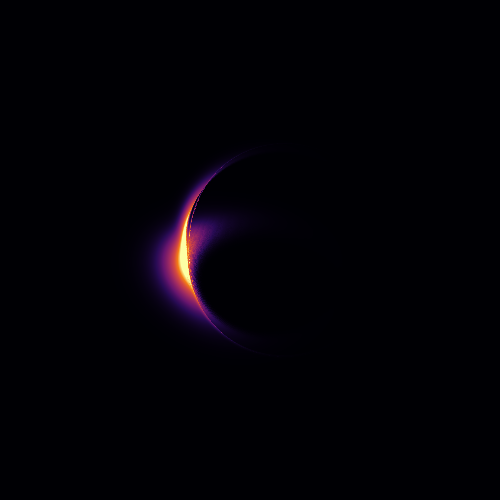
Black Hole Research Extensions — simulation render
fig 1. EHT synchrotron image: covariant radiative transfer of thermal synchrotron through a RIAF gives the asymmetric, Doppler-brightened photon-ring crescent — the M87*/Sgr A* morphology.

One engine, eight frontiers

Because the geodesic right-hand side uses numerical metric derivatives, a new spacetime is one metric() override — so testing the Kerr hypothesis against charged Kerr-Newman, regular Bardeen, and Hayward black holes is nearly free. Each extension is a real, validated computation, with the two genuinely multi-week efforts (turbulent GRMHD, 3+1 numerical relativity) done at the standard reduced-but-rigorous level and labeled as such.
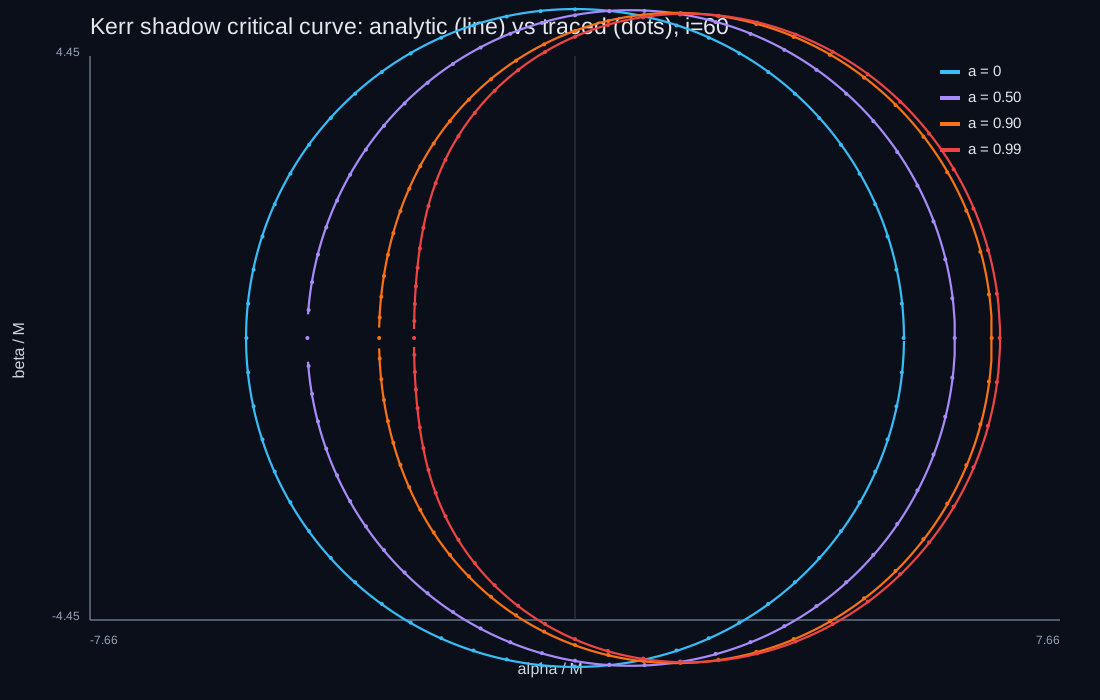
Shadow critical curves: the exact Bardeen analytic curve against the numerically
fig 2. Shadow critical curves: the exact Bardeen analytic curve against the numerically traced boundary, agreeing to ~0.1%, flattening into a "D" as spin rises.

Universal photon-ring structure

Equatorial photons wind by an angle that diverges near the critical impact parameter, and the subring spacing obeys (b_n - b_c) \propto e^{-\gamma n}. The fit gives γ = 3.143, matching the Schwarzschild value π to 0.03% — the universal photon-ring demagnification of Johnson et al. (2020), reproduced from a traced ray bundle.
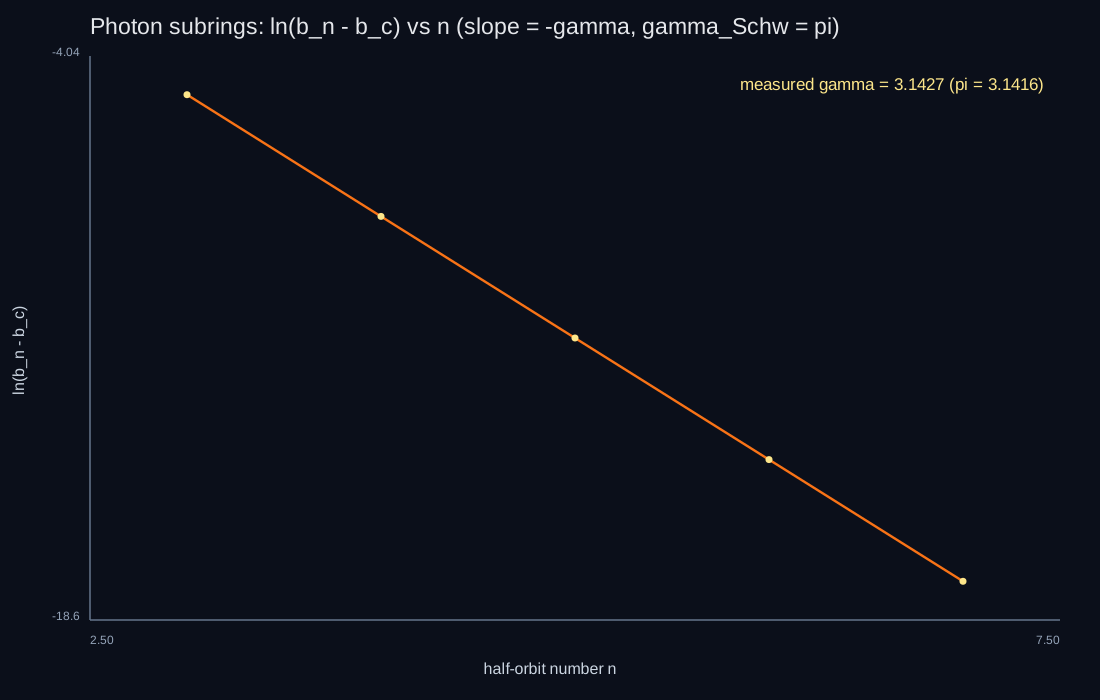
Photon subrings: successive rings are e^{-π} ≈ 0.043× closer to the critical cur
fig 3. Photon subrings: successive rings are e^{-π} ≈ 0.043× closer to the critical curve. The fitted Lyapunov exponent γ = 3.143 matches π to 0.03%.

From light to images to waves

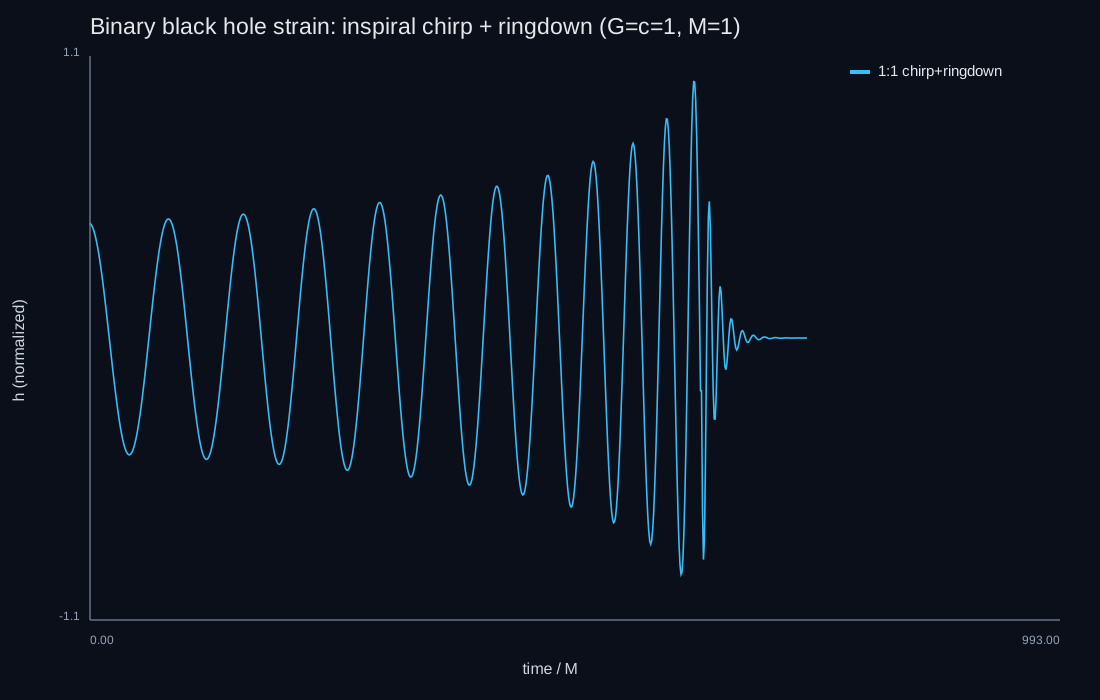
Covariant radiative transfer of thermal synchrotron yields the EHT crescent; exact Penrose-Walker transport gives a polarized image with |m| ≈ 11%; a Fishbone-Moncrief torus closes the honest fluid-to-image chain at equilibrium. And a semi-analytic inspiral-merger-ringdown — PN chirp, NR-calibrated remnant (a_f = 0.687, 4.8% radiated), Kerr l=m=2 ringdown — reproduces the GW150914 numbers.
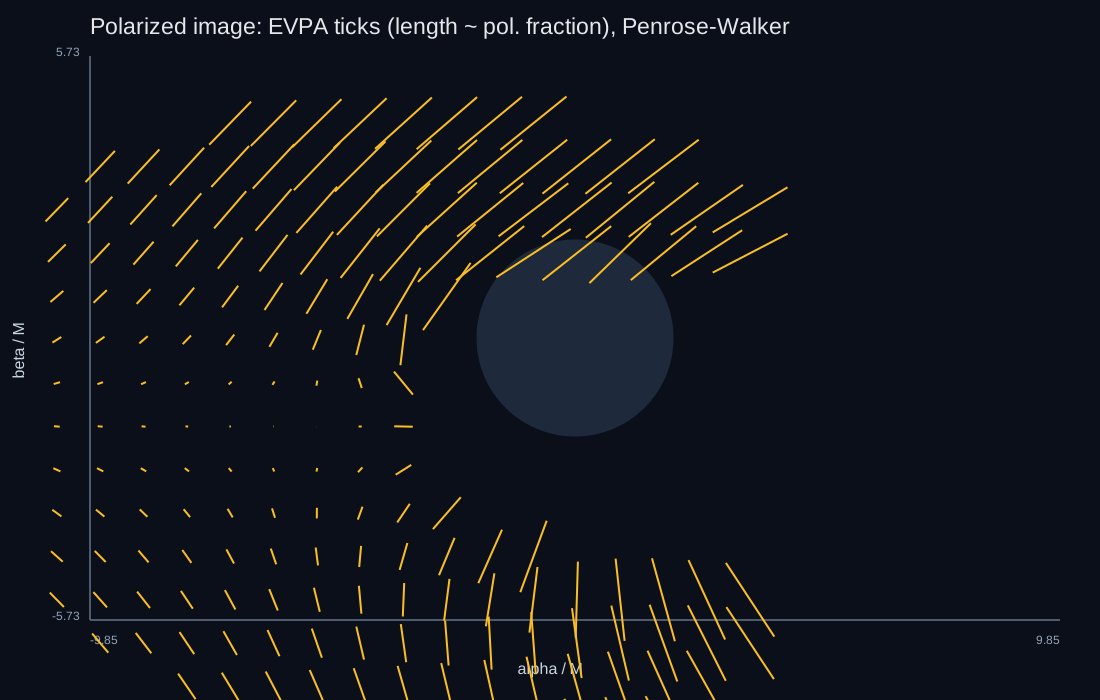
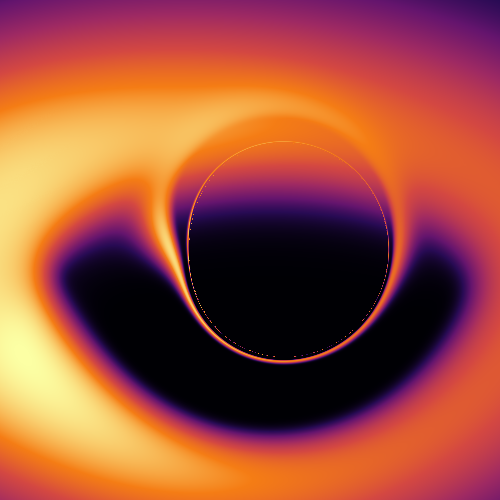
Polarized image via exact Penrose-Walker transport: the electric-vector angles f
fig 4. Polarized image via exact Penrose-Walker transport: the electric-vector angles form a coherent spiral, with image-integrated linear polarization |m| ≈ 11%.
A Fishbone-Moncrief equilibrium torus — the GR-hydro initial condition every GRM
fig 5. A Fishbone-Moncrief equilibrium torus — the GR-hydro initial condition every GRMHD run starts from — built from its relativistic potential and imaged.
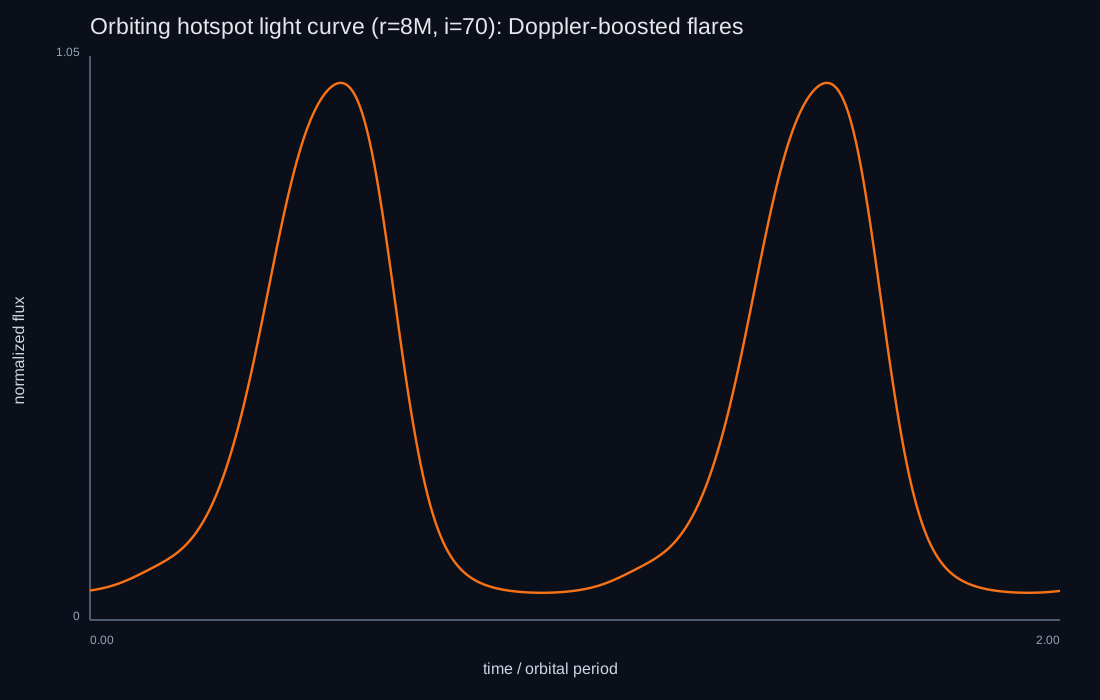
An orbiting hotspot light curve flaring ×20 per orbit from Doppler boosting and
fig 6. An orbiting hotspot light curve flaring ×20 per orbit from Doppler boosting and lensing, with light-travel-time delays — the Sgr A* flare model.
A binary-merger waveform: post-Newtonian chirp, NR-calibrated remnant, and Kerr
fig 7. A binary-merger waveform: post-Newtonian chirp, NR-calibrated remnant, and Kerr ringdown. Scaled to 65 M_⊙ it gives a ~276 Hz ringdown — the GW150914 values.

This chapter is drawn from the physics-lab study notes and renders. The longer write-ups and project essays live on the blog.

Read more on the blog →