The Double Pendulum
When does a pendulum hanging from a pendulum look regular, and when does it become chaotic?
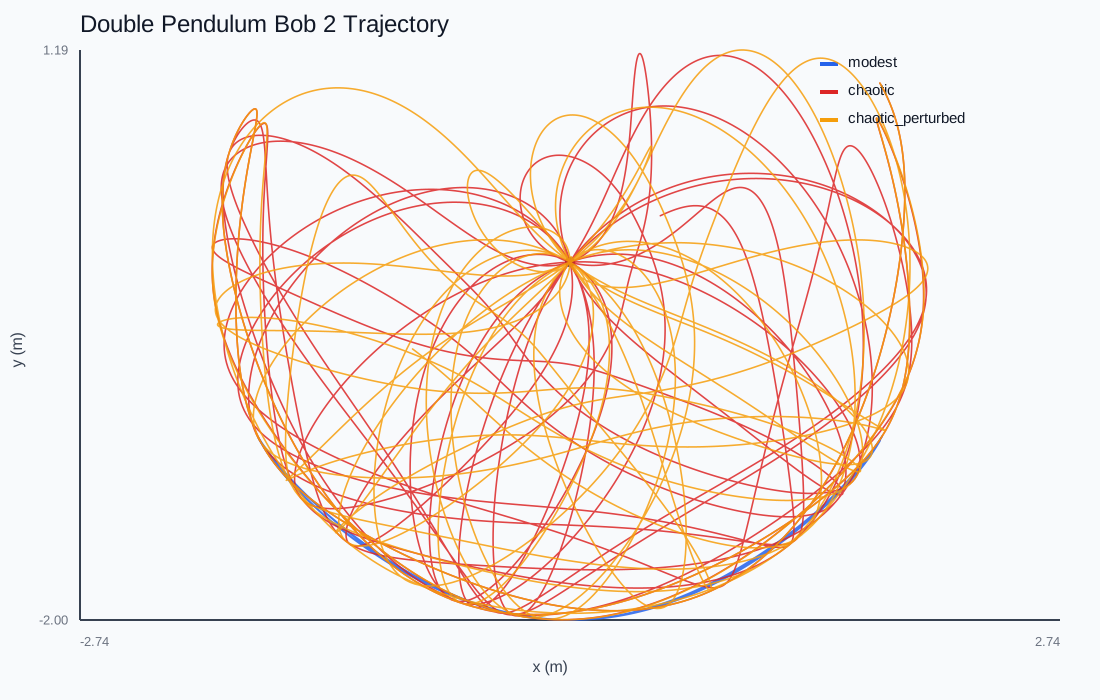
Two double pendulums released 0.0001 rad apart, in blue and gold. Identical equations, identical timestep — and within seconds their lower bobs are nowhere near each other. This is deterministic chaos.
Coupled and nonlinear
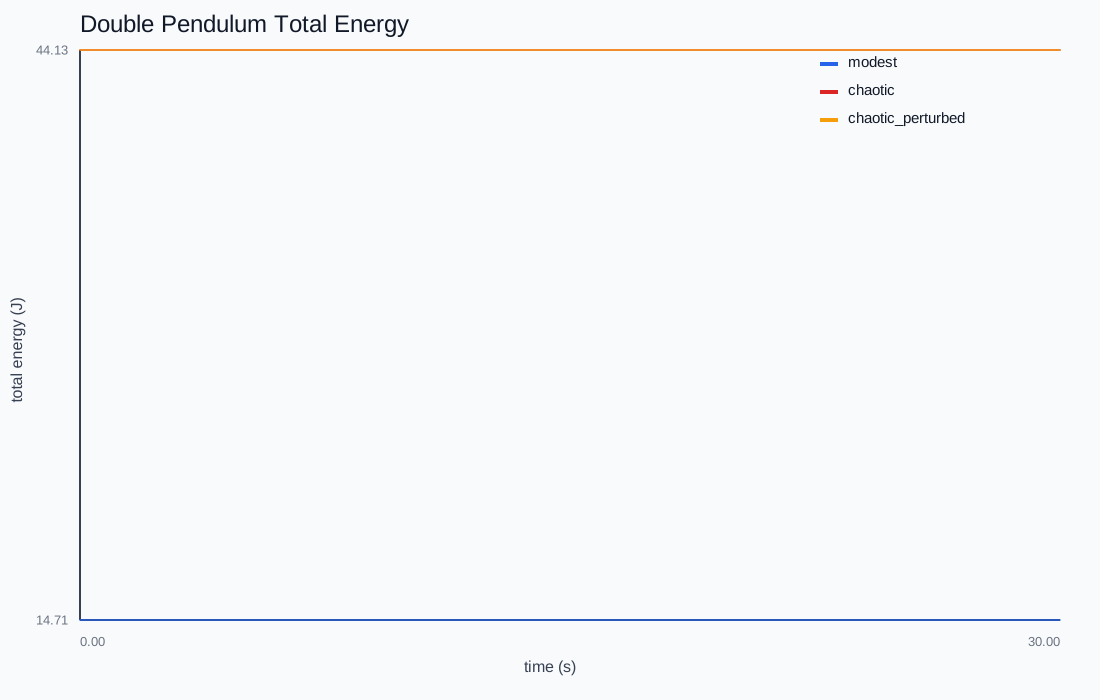
The Lagrangian equations of motion couple the two angular accelerations through the velocities. That velocity dependence is exactly why velocity-Verlet is no longer strictly symplectic for this system, so RK4 becomes the integrator of choice and explicit Euler is kept only as a cautionary tale.
Regular at small angles
Start both arms at 15° and the motion is close to two coupled harmonic oscillators — the lower bob traces a tidy interference pattern of two normal modes. It looks almost periodic, and over short times it nearly is.
Chaos you can measure
Start both arms at 120° and the system is chaotic in the technical sense: the chaotic_perturbed run shifts the second angle by just 1e-4 rad, and within a few seconds the two paths — same integrator, same timestep — are unrecognizably different. Sensitive dependence on initial conditions, rendered as two diverging curves.
This chapter is drawn from the physics-lab study notes and renders. The longer write-ups and project essays live on the blog.